






















Built to Break: Fashion as the Skeleton of Future Collapse – Comme des Garçons

In the dim glow of cultural entropy, where systems fray and identities scatter, fashion emerges not as an accessory to decline but as its architecture. Comme Des Garcons It is both mirror and mechanism, reflecting the crumbling faade of late capitalism and helping to engineer its inevitable collapse. Few fashion houses understand and articulate this truth as lucidly as Comme des Garons. Since its inception, the brand has dismantled the very idea of beauty, permanence, and coherence in design. In doing so, it has become the skeletal frame of an industry and perhaps a civilization built to break.
Deconstruction as Design, Destruction as Vision
Rei Kawakubo, the enigmatic founder of Comme des Garons, has never hidden from chaos. If anything, she sculpts with it. Her garments are ruins in motion torn, asymmetrical, gaping, stitched from the logic of ruin. The very name Comme des Garons, translating to like the boys, implies a foundational subversion, a deliberate rejection of traditional femininity and fashion norms. Each collection from the house reads like a funeral for conformity, mourning the illusions of timelessness that define Western fashion.
To wear Comme des Garons is to declare allegiance to impermanence. The clothes often look incomplete or damaged, as though unearthed from a future archaeological dig. They suggest a world in collapse, one where materials and identities must be reassembled from fragments. In this way, the brand doesnt just deconstruct clothing it deconstructs time itself, inviting us to consider the end before weve fully understood the beginning.
The Anti-Aesthetic Aesthetic
In a market that thrives on seasonal novelty, Comme des Garons offers an aesthetic of deliberate alienation. The silhouettes challenge bodily expectations padded forms, distorted volumes, sleeves where there should be none, holes that refuse closure. There is something aggressively unwearable about much of Kawakubos work, yet it sells, it survives, it influences. Why?
Because it speaks a deeper truth: the world is not elegant. The world is broken and breaking, and the closer fashion aligns with this fact, the more honestly it functions as cultural commentary. In this way, Comme des Garons anticipates collapse not just stylistically but ideologically. It forgoes luxurys polish in favor of fashion as visual dissent. It doesnt flatter the body; it questions its stability, its boundaries, its relevance in a post-human, digitized, fragmented era.
Commodifying Dystopia
Yet even the most radical gestures are not free from consumption. Comme des Garons, for all its subversion, is still a commercial entity sold in boutiques, worn by celebrities, and dissected in magazines. This is where the brand becomes not just a critique of fashions role in systemic decay, but a part of the machinery itself.
Kawakubos refusal to explain her collections, to offer digestible meaning, creates an aura of mystique that becomes marketable. Her ambiguity is commodified. The collapse, it seems, can be worn if you can afford it. In this way, Comme des Garons becomes both prophet and profiteer of cultural disintegration. It sells the rubble before the building has even come down.
This dynamic mirrors a broader truth in contemporary fashion: the spectacle of decay sells. Ripped jeans, distressed leather, combat boots, post-apocalyptic styling these arent fringe elements anymore. Theyre mainstream, mass-produced emblems of a world enthralled by its own collapse. Comme des Garons may have pioneered the look, but the world has caught up. The aesthetic of brokenness has become an economy.
Fashion in the Age of Climate Grief
To understand Comme des Garons as the skeleton of future collapse is also to see it within the larger crisis of climate change. Fast fashion is one of the most environmentally destructive industries on Earth, yet consumers continue to devour it in bulk. Kawakubos work does not explicitly market itself as sustainable, yet her approach creating garments that resist trends, that feel immune to obsolescence is inherently counter-consumerist.
Still, the irony remains. In an age where fashion is rapidly consuming the planet, can the high-art deconstruction of Comme des Garons be anything more than aesthetic theater? Perhaps. In its most honest moments, the brand is less about proposing solutions than exposing the contours of our collective denial. It is an artistic autopsy, revealing what lies beneath the illusion of control and order that defines capitalist fashion.
Comme des Garons shows us a world where clothes are not tools of seduction but shrouds of mourning mourning for lost futures, lost identities, lost meaning. The clothing becomes costume for a performance we didnt audition for: the play of collapse.
The Beauty of Refusal
Ultimately, what distinguishes Comme des Garons in the crowded landscape of fashion-as-spectacle is its unwavering commitment to refusal. It refuses to be legible. It refuses to explain itself. It refuses the tyranny of the marketable. It refuses the expectation that fashion should be beautiful, flattering, or even comprehensible. In doing so, it mirrors a broader societal fatigue a sense that the world we were promised is no longer available.
This refusal is not nihilism. It is rebellion. In its asymmetry, its fragmentation, its persistent evasion of resolution, Comme des Garons articulates a new kind of beauty one born not of perfection, but of persistence. The brand stands not at the center of collapse, but at its edge, whispering what comes next: forms we cant name, patterns we cant decode, futures we cant see but must begin to imagine.
Conclusion: Dressing for the End, Designing for After
To say that Comme des Garons is built to break is not to insult it it is to recognize its radical truth. Fashion is not just clothing; it is cultures outermost skin, and like skin, it scars, bruises, and sheds. Rei Kawakubo has spent decades preparing us to see the scar tissue of our civilization for what it is: not shameful, but revealing. Her garments show the seams of collapse, but also the possibility of regeneration. Not healing in the traditional sense not a return to wholeness but transformation through ruin.
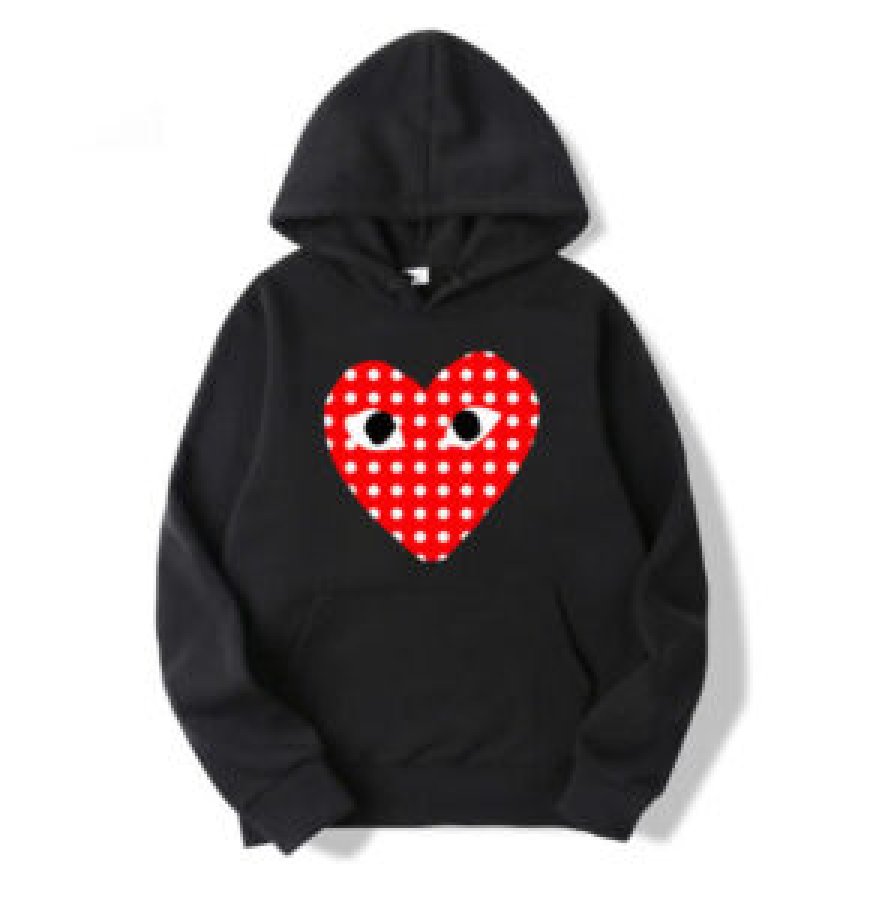
As the Anthropocene unfolds, as institutions fail and identities blur, Comme des Garons offers a wardrobe for the in-between. Comme Des Garcons Hoodie For the liminal space between now and whatever comes after. Not designed to last forever but to endure long enough to ask the right questions. That may be the most responsible fashion design of all.
In the end, we may discover that the most powerful statement a garment can make is not about status, sex, or success but survival. And in the torn, twisted, haunting silhouettes of Comme des Garons, we may already be rehearsing our final act.