

























Creating a Thesis Editing Checklist to Stay Organized
Create a comprehensive thesis editing checklist to stay organized. Master structural, linguistic, and formatting reviews for a flawless doctoral submission.

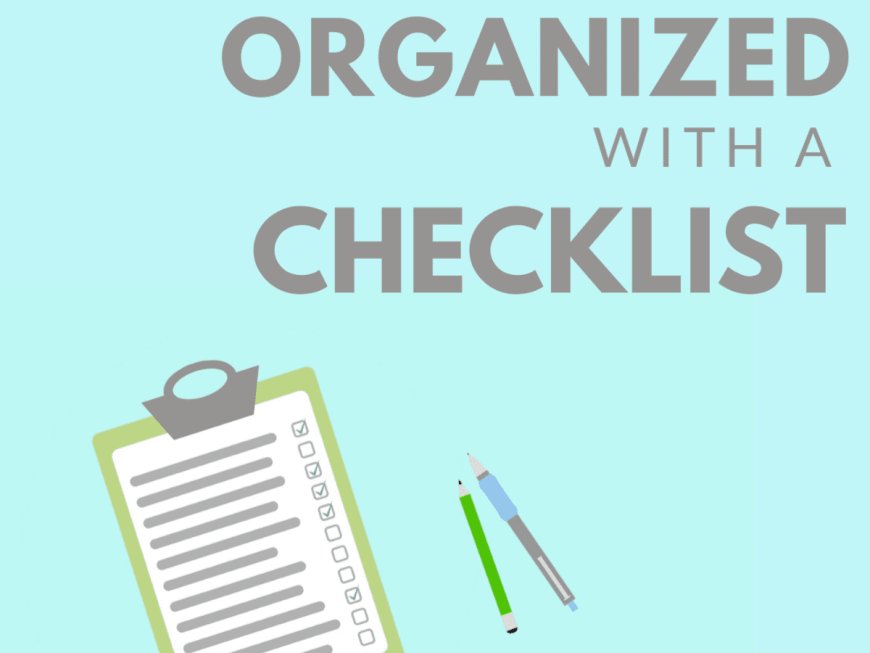
The journey of completing a doctoral thesis is a monumental undertaking, culminating in a document that represents years of rigorous research, critical thinking, and dedicated writing. The sheer volume and complexity of a thesis can be overwhelming, making the editing phase particularly daunting. Without a structured approach, the process can devolve into a chaotic and inefficient exercise, leading to missed errors and escalating stress. This guide champions the creation and diligent application of a comprehensive thesis editing checklist as an indispensable tool for maintaining organization, ensuring thoroughness, and achieving the highest standards of academic rigor. We will delve into the various layers of editing, from macro-level structural considerations to micro-level grammatical precision, providing an intermediate-level framework for systematically perfecting your scholarly work.
The Indispensable Role of a Checklist in Thesis Editing
The human mind, while capable of extraordinary feats, is prone to oversight, especially when faced with large, intricate tasks. A thesis, often spanning hundreds of pages, embodies this challenge perfectly. Relying solely on memory or a haphazard review process will inevitably lead to errors, inconsistencies, and a diminished quality of the final submission. This is precisely where a robust editing checklist proves invaluable.
A checklist provides a systematic framework, breaking down the mammoth task of thesis editing into manageable, actionable steps. It ensures that no critical aspect is overlooked, from formatting minutiae to the coherence of your arguments. Moreover, it offers a sense of control and progress, transforming an otherwise overwhelming endeavor into a structured project. For students navigating the complexities of academic writing, particularly when considering English proofreading online services or professional writing editing, having a clear internal guideline helps in understanding what to look for, what to fix, and when external help might be most beneficial. Ultimately, the checklist serves as your personal quality assurance mechanism, safeguarding your scholarly reputation and maximizing the impact of your research.
Macro-Level Review: Structure, Logic, and Argumentation
Before delving into the finer points of language and grammar, the initial phase of thesis editing must focus on the macro-level integrity of your work. This involves evaluating the overarching structure, the logical flow of your arguments, and the coherence of your narrative. Your checklist for this stage should address the following critical areas:
Overall Coherence and Flow
Does the thesis present a cohesive and logical argument from beginning to end? Do chapters transition smoothly, or are there abrupt shifts in topic or tone?
Chapter Structure
Is each chapter well-organized with a clear introduction, body, and conclusion? Do section headings accurately reflect the content?
Argument Development
Is your central thesis statement clearly articulated and consistently supported throughout the document? Are all claims substantiated with evidence and analysis? Are there any logical fallacies or unsupported assertions?
Research Question Alignment
Does your entire thesis directly address your stated research questions? Is the scope of your research appropriate and consistent?
Methodology and Results Clarity
Is your methodology clearly explained and justified? Are your results presented accurately and without ambiguity? Do the results effectively address the research questions?
Discussion and Conclusion Strength
Does the discussion effectively interpret your findings in relation to existing literature? Are your conclusions well-supported by your data and analysis? Do they clearly articulate the contribution of your research?
Contribution to Knowledge
Is the unique contribution of your thesis clearly articulated and consistently highlighted? How does your work advance the field?
This macro-level review ensures that the foundational elements of your thesis are sound before you invest time in refining the language. Neglecting this stage can result in a beautifully written but structurally flawed document.
Mid-Level Review: Clarity, Conciseness, and Academic Tone
Once the structural integrity of your thesis is confirmed, the next phase of your editing checklist should focus on the clarity, conciseness, and academic tone of your writing. This involves scrutinizing sentence and paragraph construction to ensure effective communication of complex ideas.
Clarity of Expression
Is the language precise and unambiguous? Are there any vague or convoluted sentences that could be rephrased for greater clarity? Avoid jargon where simpler terms suffice, or ensure technical terms are clearly defined.
Conciseness
Have you eliminated redundant words, phrases, and sentences? Does every word contribute meaningfully to the message? Academic writing often suffers from excessive wordiness; strive for economy of language.
Academic Tone and Style
Is the tone consistently formal, objective, and scholarly? Have you avoided colloquialisms, contractions, and overly informal language? Is the voice appropriate for a doctoral dissertation?
Sentence Structure Variety
Do you employ a variety of sentence structures to maintain reader engagement and avoid monotony? Are there too many short, choppy sentences or overly long, complex ones?
Paragraph Cohesion
Does each paragraph focus on a single main idea? Do sentences within paragraphs flow logically? Are transition words and phrases effectively used to connect ideas between sentences and paragraphs?
Use of Evidence and Citations
Is all evidence correctly integrated and attributed according to the required citation style (e.g., APA, MLA, Chicago)? Are there any instances of misattribution or insufficient referencing?
Voice and Point of View
Is the academic voice consistent (e.g., using third person, avoiding first person unless specified by guidelines)?
This stage significantly improves the readability and intellectual rigor of your thesis, ensuring your sophisticated ideas are communicated with precision and elegance.
Micro-Level Review: Grammar, Punctuation, and Spelling
This is the meticulous, line-by-line scrutiny that often comes to mind when one thinks of thesis editing. While it may seem tedious, accuracy in grammar, punctuation, and spelling is paramount for conveying professionalism and scholarly credibility. Even minor errors can distract readers and undermine your authority. Your checklist for this level should include:
Grammar
Subject-verb agreement: Do all verbs agree in number with their subjects?
Verb tense consistency: Is verb tense used consistently and logically throughout the text?
Pronoun agreement and clarity: Do pronouns agree with their antecedents in number and gender, and is their reference clear?
Dangling modifiers/misplaced modifiers: Are all modifiers clearly and correctly linked to the words they modify?
Parallelism: Are items in a series, or ideas of equal importance, expressed in parallel grammatical structures?
Sentence fragments and run-on sentences: Are all sentences complete thoughts, and are there no improperly joined independent clauses?
Punctuation
Comma usage: Are commas used correctly for lists, clauses, introductory phrases, etc.?
Semicolons and colons: Are semicolons used correctly to join independent clauses or separate complex list items? Are colons used correctly to introduce lists, explanations, or quotes?
Apostrophes: Are apostrophes correctly used for contractions and possessives?
Quotation marks: Are quotation marks used accurately for direct quotes and specific titles?
Hyphens and dashes: Are hyphens used correctly for compound adjectives and prefixes? Are en dashes and em dashes used appropriately for ranges and parenthetical statements?
Spelling
Typographical errors: Have all typos been identified and corrected?
Homophones: Have you distinguished between commonly confused words (e.g., "their/there/they're," "affect/effect")?
Consistency in spelling: If you have chosen between alternative spellings (e.g., "colour/color"), is it consistent throughout?
Capitalization
Is capitalization used correctly for proper nouns, titles, and the beginning of sentences?
This granular level of detail is where scientific proofreading services often excel, as they possess the specialized knowledge to catch discipline-specific errors that automated checkers might miss.
Formatting and Referencing: Adherence to Guidelines
Beyond the linguistic perfection, the presentation of your thesis through consistent formatting and accurate referencing is crucial. Universities and academic institutions typically have very specific guidelines that must be rigorously followed. Failure to adhere to these can lead to rejection or significant delays. Your checklist should include:
University/Departmental Guidelines
Have you thoroughly reviewed and applied all specific formatting requirements (margins, font, spacing, page numbering, table of contents, list of figures/tables)?
Referencing Style Consistency
Is your chosen citation style (e.g., APA, MLA, Chicago, Harvard, Vancouver) applied consistently and accurately throughout the entire thesis, including in-text citations and the reference list/bibliography?
Reference List Accuracy
Does every in-text citation have a corresponding entry in the reference list, and vice versa? Are all reference list entries complete and formatted precisely according to the style guide?
Figure and Table Presentation
Are all figures and tables correctly numbered, titled, and captioned? Are they clearly legible and properly referenced within the text?
Appendices
Are all appendices correctly formatted, labeled, and referred to in the main body of the thesis?
Abstract and Keywords
Is your abstract concise, accurate, and reflective of your thesis content? Are keywords effectively chosen to maximize discoverability?
Adherence to these guidelines demonstrates meticulousness and respect for academic conventions, which is highly valued by examiners and crucial for publications in journals such as quality in higher education journal.
Leveraging Tools and External Expertise: Enhancing Your Checklist
While your personal checklist is a powerful tool, it can be significantly enhanced by leveraging available technologies and, where appropriate, professional assistance.
Word Processor Tools
Utilize your word processor's spell checker and grammar checker, but exercise caution. These tools are helpful for catching obvious errors but often miss nuanced mistakes or suggest incorrect changes. They are a starting point, not a definitive solution.
Grammar Checkers (Online)
Tools like Grammarly or ProWritingAid can offer more sophisticated suggestions than basic word processor checkers. However, they also have limitations and should be used as an aid, not a replacement for human review.
Read Aloud
Reading your thesis aloud, or using a text-to-speech converter, can help you catch awkward phrasing, repetitive sentences, and grammatical errors that your eyes might skip over.
Fresh Eyes
After completing your self-editing, ask a trusted peer, mentor, or even a non-specialist to review your thesis. Fresh eyes can spot errors or confusing passages that you, as the author, are too familiar with to notice.
Professional Editing Services
For the ultimate assurance of quality, consider engaging professional writing editing services. Specialized thesis editing and scientific proofreading services offer an objective, expert review that goes beyond what automated tools or even a peer can provide. They are particularly adept at catching subtle grammatical errors, improving flow, ensuring consistent academic tone, and addressing complex formatting requirements. This is an investment in the quality and impact of your years of work. Many services, including English proofreading online, offer quick turnarounds for urgent needs.
The Iterative Process: Multiple Passes and Rest Periods
Editing a thesis is rarely a single-pass event. It is an iterative process that benefits from multiple reviews, often with breaks in between. Your checklist should implicitly encourage this approach:
Segment Your Editing
Break your thesis into manageable sections or chapters for editing. Tackle one section at a time, focusing on specific checklist items before moving on.
Focused Passes
Instead of trying to catch every type of error in one go, dedicate separate passes to different categories of your checklist (e.g., one pass for macro-structure, another for grammar, a third for formatting).
Take Breaks
Step away from your thesis for a few hours, or even a day or two, between editing passes. This allows your brain to reset, enabling you to approach the text with fresh eyes and a more objective perspective. What seems perfectly clear when you are immersed in it might reveal inconsistencies after a break.
Print and Review
While digital editing is convenient, printing out your thesis (or sections of it) can often reveal errors that are overlooked on a screen. Mark up the physical copy, then transfer the changes digitally.
This methodical and iterative approach, guided by your comprehensive checklist, ensures that your thesis receives the thorough and systematic review it deserves, maximizing its quality before submission.
A Masterpiece Through Meticulous Organization
The creation of a doctoral thesis is a profound academic achievement. The editing phase, though demanding, is your final opportunity to polish this significant work into a masterpiece of scholarly communication. By diligently creating and employing a comprehensive thesis editing checklist, you empower yourself with a structured, systematic approach that ensures no detail is overlooked. From the grand architecture of your arguments to the minutiae of punctuation, every element receives the attention it warrants. This meticulous organization not only enhances the quality and impact of your research but also streamlines a potentially overwhelming process, allowing you to submit your thesis with confidence, knowing it reflects the highest standards of academic excellence.